

A Milestone for UAP Science
Having followed the two studies by Villarroel et al. (2025) and Bruehl & Villarroel (2025), along with the subsequent rebuttal by Watters et al. (2026), and the recently released response to that critique by Villaroel et al. (2026), I am fascinated by the actual scientific debate taking place here. The back-and-forth between astrophysicist and author Adam Frank and Dr. Beatriz Villarroel on X is healthy and represents the scientific process at work12.
“I don’t think many realize just how big of a deal this is: work on UAP/UFOs has been accepted for review in major, peer-reviewed scientific journals.”
Unfortunately, this doesn’t mean the findings of Villarroel et al. or Watters et al. should be accepted without critique. This underscores a few crucial points:
First: Rigor and critique are fundamental to the scientific process.
Second: Replies to these discussions by the broader UFO/UAP community often demonstrate a lack of understanding regarding the rigors of this process.
Third: Due to this misunderstanding, critique is frequently viewed as evidence of mainstream bias against “fringe” topics—or worse, confirmation of a vast conspiracy against Villarroel and others trying to break into this field.
Fourth: Resistance to the UAP/UFO topic is still a hurdle to overcome. This is evident in the decision by arXiv moderators to reject two preprints co-authored by Villarroel in late 2025, highlighting the role that preprint moderators can play in stifling scientific debate.
The Value of Critique
I rather enjoyed Adam Frank’s piece which started off the back-and-forth on X. Having come to it unfamiliar with his work, it was nice to read a polished article supporting the significance of Villarroel’s landmark study in bringing serious UAP science to the mainstream. This acknowledgment should equally extend to Watters et al., whose rigorous critique of Villarroel’s work is highly commendable.
(For those unfamiliar, the subjects of this debate—”transients”—are essentially short-lived astronomical anomalies, such as flashes of light or vanishing stars that appear in temporary bursts rather than as permanent fixtures in the night sky).
To understand this debate, we have to look at what was actually found. In their analysis of 1950s photographic plates from the Palomar Observatory Sky Survey (POSS-I), Villarroel and her team identified thousands of these short-lived transients. Most intriguingly, they claimed these flashes of light appeared significantly less often within the Earth’s shadow—suggesting they might be sun-illuminated, artificial objects in Earth’s orbit. They even proposed statistical correlations between these flashes, historical UAP reports, and 1950s nuclear testing.
Watters et al., however, pushed back on this premise entirely. In their critical evaluation, they argued that these “vanishing stars” are likely nothing more than photographic artifacts, dust, or plate defects. More importantly, Watters and his co-authors dismantled the statistical assumption that these anomalies were distributed randomly and evenly across the sky. They pointed out severe spatial biases in the old plates—such as clumps of defects near the edges and corners—that artificially created the illusion of an “Earth shadow deficit”.
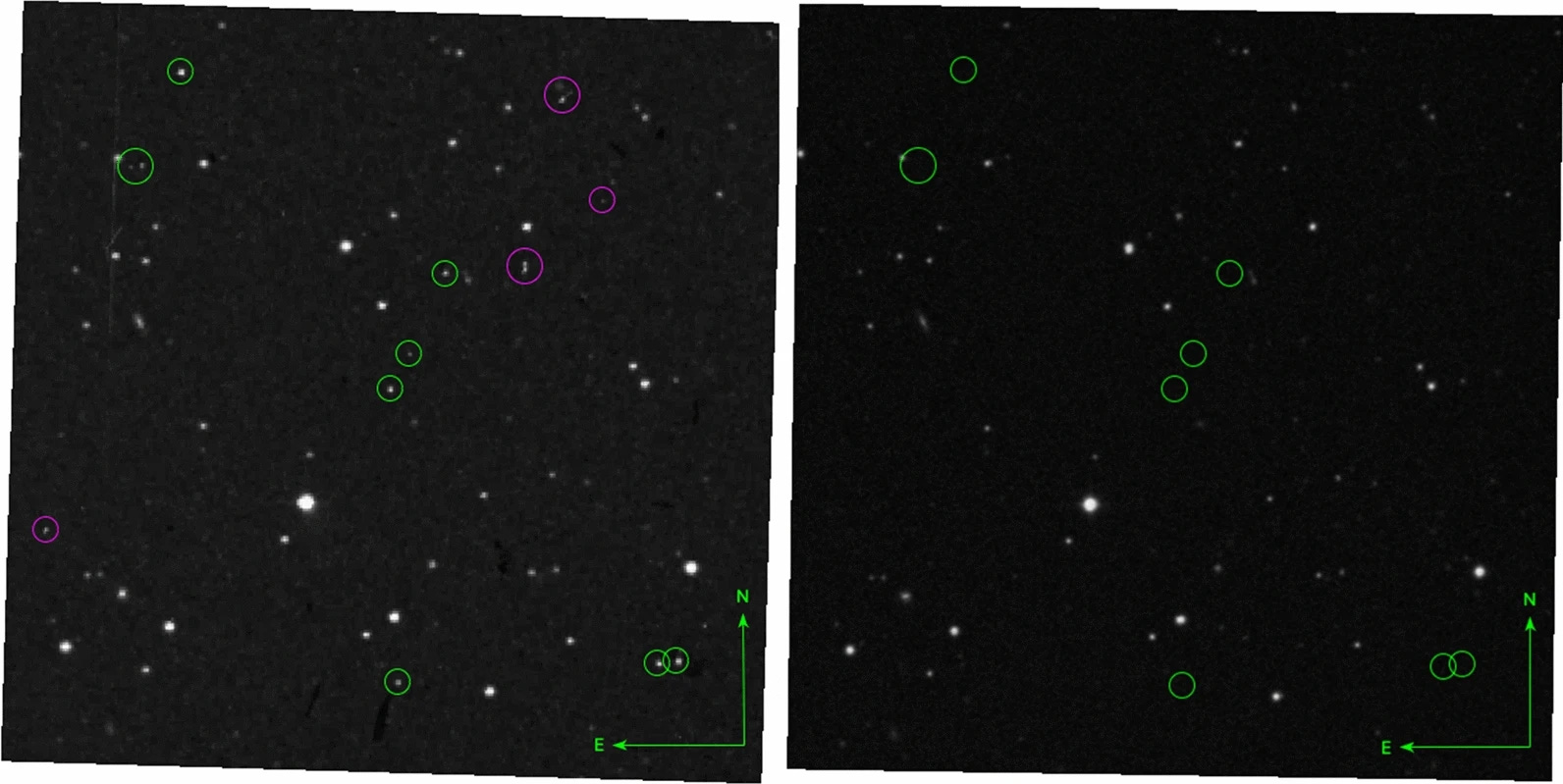
While I am not an astronomer or astrophysicist, my background as an applied statistician allows me to appreciate the rigorous design of both papers. Mr. Frank correctly points out the role critique plays by weighing the Watters et al. methodology against Villarroel’s. It wasn’t until I read through the two Villarroel studies, the Watters critique, and Frank’s piece that I had to step back and truly appreciate the imagination and technical prowess of Villarroel and her team.
However, science must be replicable. As Frank correctly points out, there are rules scientists must play by. This reality is causing a great deal of tumult in the UAP community. Some are treating this as a team sport; I would rather take this passion and use it as a teaching moment.
Statistics, Audits, and the Burden of Proof
Because of my background, a few statistical issues stood out. First, there are concerns about the VASCO dataset lacking random uniformity. Second, there is the initial 22-sigma result, which was subsequently throttled down to a 7.6-sigma level following the application of stricter methods to the transients.
“In physics, a 5-sigma level finding is considered the gold standard. Anything above that better—as the colloquialism in online UAP discussions goes—bring the receipts.”
Allow me to provide a comparable anecdote from my own experience:
I was brought onboard a multi-million-dollar government project to oversee contract management. Part of this contract utilized proprietary modeling techniques to evaluate multi-billion-dollar government supply chains and defense infrastructure. This evaluation relied on a gold-standard metric similar to the 5-sigma level. When the government consultant brought back the equivalent of a 22-sigma output near the end of the project, it raised several red flags. The expenditure of billions of taxpayer dollars may not carry the existential weight of “we are not alone,” but in the realm of real-world decisions, it certainly brings economies of scale.
This was problematic because the consultant’s proprietary modeling made auditing their methodology nearly impossible. We were assured we could trust their findings. Deeming this unacceptable, I pushed for an audit and brought in outside, non-paid consultants. Both concluded that a score that high is not statistically probable, has never been statistically responsible, and that we needed to refine the methods used.
Thankfully for Villarroel et al. and Watters et al., methodological auditability is much easier to come by, which leads to the current contention.
Embracing Scrutiny and Separating Science from Belief
Frank argues the aforementioned issues on behalf of the Watters et al. critique. The established standards of science provide the opportunity for experts to weigh in, and they currently are. One significant feature of the Watters rebuttal is that it is authored by a majority of individuals who actually support scientific and public discourse on the UAP topic. This is healthy.
What is equally healthy is a continued emphasis on scientific literacy.
“If, as the online UAP community claims, the public can handle the truth, then by equal measure, they should be able to handle learning how science is carried out—as imperfect as it can be.”
With more involvement comes greater scrutiny, and that is the beauty of it. In an era where credentialed analysis is undergoing a public crisis of faith (not without good reason), this area of study—which has received unprecedented bipartisan support in Congress—should invite total openness from the scientific community.
We should want more people looking at this, without treating it as a team sport. Conversely, non-peer-reviewed studies supporting Villarroel’s findings (such as the work by Janne Sinkkonen) should be given the opportunity to undergo peer review, rather than being gate-kept by the preprint community writ large3. If these studies do not survive scrutiny, it isn’t a shutdown of ideas, but a necessary critique of the methodology that gets us from theory to observed scientific phenomena.
Doing this requires, paradoxically, a little bit of faith: faith in the rigor and objectivity of the scientific process, which should be upheld at all costs regardless of stigma, trusting that we are earnestly aimed at the truth. Inclusion, now more than ever, should be welcomed with the exact same rigor as the instruments of truth touted to help us arrive there. As Frank correctly states in his piece:
“In this way, the UAP/UFO community needs to ask itself a difficult question. Does that community want their subject to be part of the actual scientific process — where beliefs can get legitimately challenged — or do they just want to hold on to their beliefs no matter what? There is a word for the second option. It’s called religion.”
As both a scientist and an experiencer, separating science from belief should be a vital tool in all of our toolboxes.


